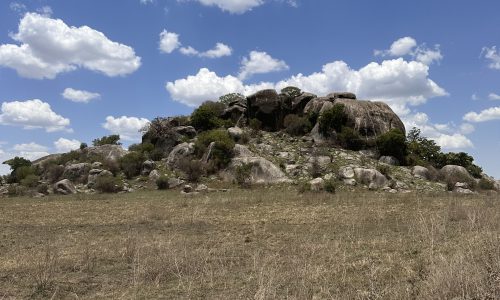
Susan continued her recent Tanzania journey, to the Serengeti, the largest of Tanzania’s national parks and the setting for the most awesome wildlife spectacle on earth – the Great Migration. Serengeti means “endless plains” in the Maasai language and within its boundaries are more than three million large mammals. The extensive grasslands are interspersed with “Kopjes”, islands of rocky outcrops which are home to their own wildlife communities which include leopard and hyrax to name a few.
We will always recommend the Serengeti as part of any safari itinerary in northern Tanzania, but we do tread with care for those who wish to see the great migration, as over-tourism is a concern for the wildlife during river crossings. Call us to chat about best time to visit and what to expect!
In Susan’s own words …
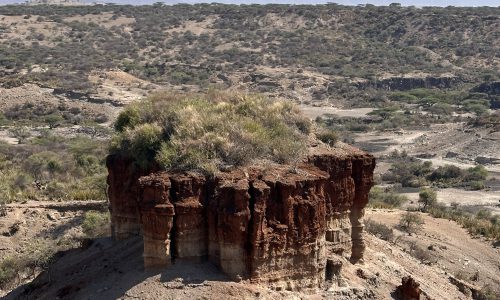
As my guide, Ndossy and I left the Ngorongoro Crater early that morning, I was excited to head into the Serengeti National Park, which began with a meaningful pause at Olduvai Gorge, often called the Cradle of Humankind. This dramatic chasm is where some of the earliest evidence of human ancestry was discovered. It’s humbling to stand there, looking out across layers of exposed earth that quietly hold millions of years of history.
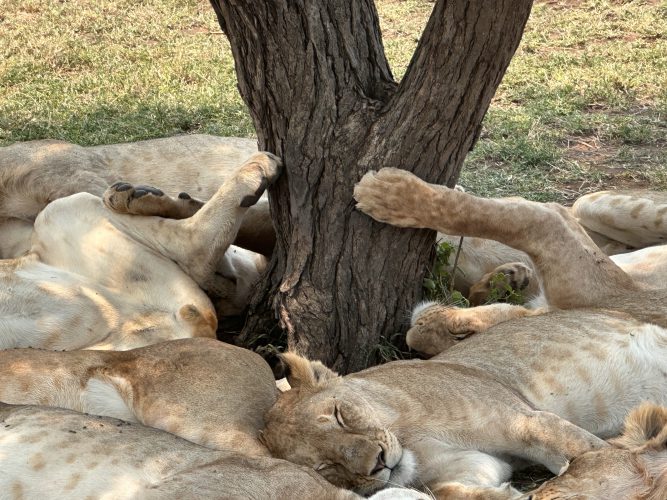
From there, the Serengeti landscape opened and flattened and we saw lions sprawled beneath acacia trees right beside the road, utterly unfazed by our presence, but seemed happy to enjoy the shade of our vehicle. We passed Simba Kopje, herds of Thomson’s gazelle flickering across the plains, and the sculptural Moru Kopjes — those iconic granite outcrops rising from the savannah like islands. Kopjes are natural fortresses: they absorb heat, attract prey, and provide vantage points for predators. If they look familiar, it’s because they inspired scenes in The Lion King — and seeing lions draped across the rocks makes the connection unmistakable.
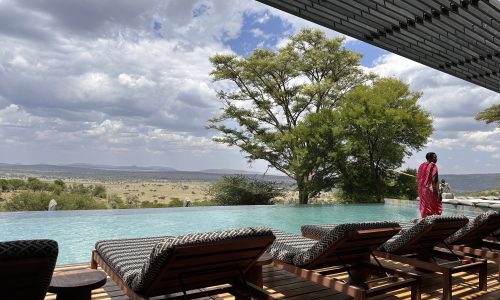
As we drove deeper into central Serengeti, we passed Lake Magadi and skirted past well-known camps — Elewana Pioneer Camp, Dunia Camp, Nasikia Camps, and Ole Serai Camps — each reflecting a different style of experiencing this vast ecosystem. Migratory herds dotted the plains near Elewana Serengeti Explorer, where we stopped for lunch and a look around. Zebras and waterbuck drank from the waterhole below as we explored the expansive property. With its spa, wine cellar, media room, boma dinners, and sweeping views, it has a resort-like feel — you can walk the grounds or hop into a golf cart. The rooms are simple and understated, but the electric screens and views over the Serengeti (and the migration, in season) are undeniably impressive.
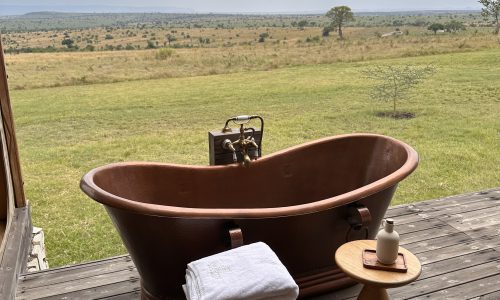
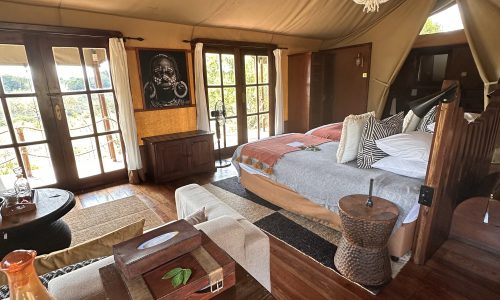
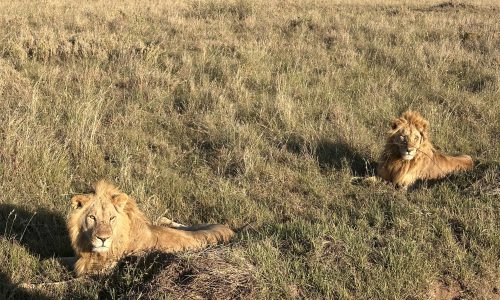
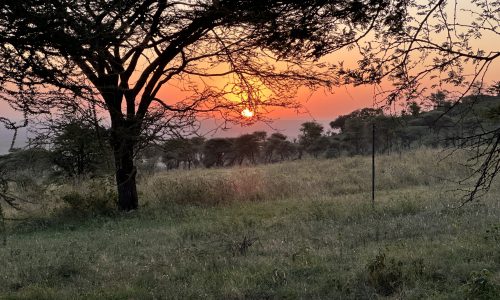
That afternoon, we continued to Singing Grass Camp, my home for the next two nights, where warm, unpretentious hospitality immediately set the tone. This is luxury with a clean, thoughtful design — a beautifully appointed tented camp with spacious rooms, indoor and outdoor showers, complemented by generous, well-prepared meals. The tents sit low to the ground with open views across the plains, creating a sense of calm and connection to the landscape. That night, lions called in the darkness — deep, resonant roars that seem to vibrate through your chest. At dawn, we watched two younger male lions being chased off by the dominant older male, a reminder of how power constantly shifts here.
Central Serengeti is famous for its cats, and it delivered in spectacular fashion. Lions lounged in the grass, cheetah scanned the horizon, and then a wonderful, rare sighting of a mother leopard resting in a tree with her nearly grown son. Seeing them together, relaxed and unhurried, was pure privilege.
We paused for lunch at Serengeti Migration Camp, tucked among rocky outcrops along the Grumeti River, and I could see why it’s a client favorite, before heading north toward Kogatende. The northern Serengeti offers a range of camp styles, from permanent luxury tented camps like Ole Serai Kogatende, where I stayed for two nights, to mobile migration camps such as Taasa Migration Camp, my final stop before flying back to Arusha.
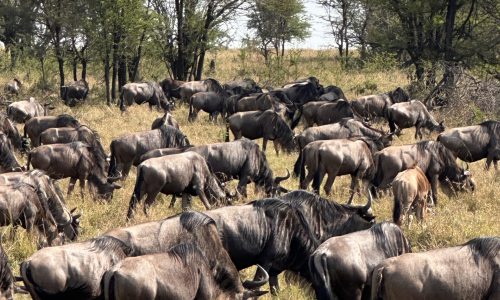
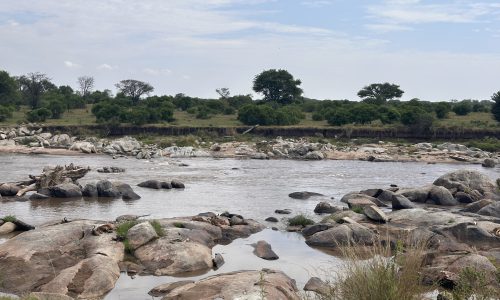
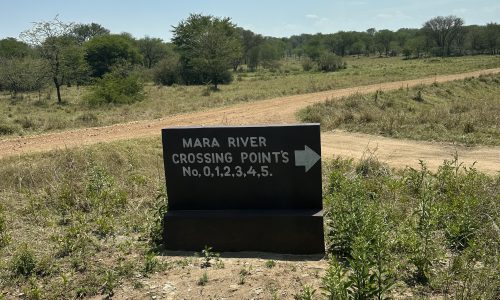
We visited the banks of the Mara River — now quiet, almost eerily so. It was hard to imagine that in July, August, and September, vehicles line up here, jockeying for position as wildebeest and zebra hurl themselves into crocodile-filled waters. The evidence remained: carcasses still scattered on the rocks below, stark reminders of the brutality of the migration. We were lucky to see a small herd gathered at the riverbank, hesitating, testing the edge — a lesson in patience. With lunch reservations and site visits ahead, we couldn’t wait for what might take hours, with no guarantee they’d cross at all.
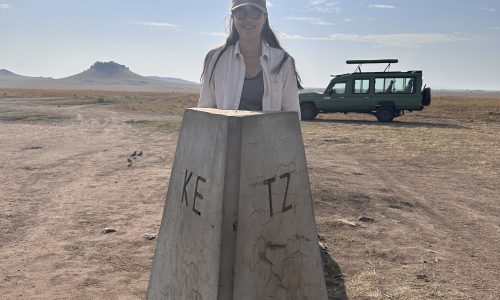
Still, the scale of it all left me awed. Hundreds upon hundreds of wildebeest and zebra stretched across the savannah, disappearing into the distance. From the Lamai Wedge, the northernmost reach of Serengeti, you can see straight into Kenya’s Masai Mara, a reminder that this migration ignores borders entirely.
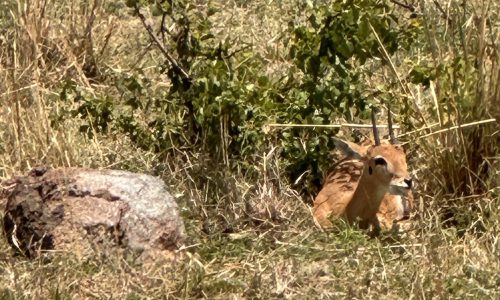
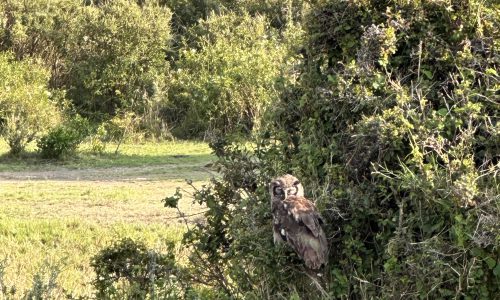
The Serengeti is best known for the Great Migration, but what truly sets it apart is that even without a river crossing, the wildlife feels relentless, the landscapes endlessly varied, and the sense of space unlike anywhere else on earth. Beyond the migration and the big cats, it was the quieter wildlife moments that stayed with me most — from the adorably petite oribi (quickly becoming my new favorite antelope) to the birds: a Verreaux’s eagle-owl dozing in a tree, pink eyelids on full display, and a bateleur eagle standing ankle-deep in a puddle — a sight so good even Ndossy pulled out his camera.
Having a private guide and vehicle throughout was a privilege, allowing time for these unhurried encounters that I’ve come to treasure on safari. Saying goodbye to Ndossy at the airstrip — engines warming, dust swirling — brought that familiar mix of gratitude and quiet sadness.
The Serengeti doesn’t just stay with you. It calls you back.
Where Susan Stayed and Visited in the Serengeti
- Elewana Serengeti Explorer — A contemporary, lodge-style property with sweeping Serengeti views, resort amenities, and a lively social atmosphere.
- The Singing Grass — A relaxed, luxury tented camp offering spacious tents, open views, and an authentic safari feel.
- Nimali Serengeti — An intimate, stylish camp with beautiful, spacious air conditioned suites.
- Laba Out of Africa Legend — A beautiful, classic safari camp inspired by old-world exploration, where I enjoyed a delicious organic lunch. You can easily combine this camp with their other property Laba Grumeti Art Lodge.
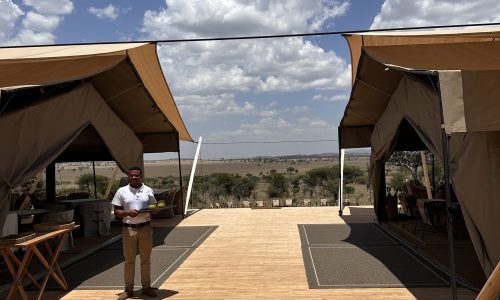
- Elewana Serengeti Migration Camp – A classic safari camp of elegant luxury tents that feels wonderfully secluded, timeless, and perfectly immersed in its surroundings.
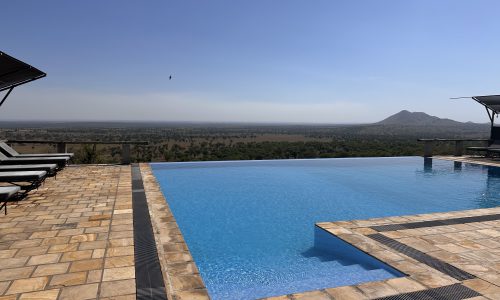
- Kubu Kubu Tented Lodge — A modern tented lodge featuring elevated decks and expansive views from both the guest rooms and the pool area, now complemented by a newly added gym. With sister properties located on a coffee farm, I enjoyed the most delicious cup of coffee of my stay while overlooking the Serengeti.
- Ole Serai Kogatende — A well-located classic safari camp, on the migration route, just 10 minutes form the Mara River.
- Kichakani Camp — A mobile camp that moves seasonally, placing guests close to the migration with a classic safari atmosphere.
- Kuria Hills Lodge — A striking hillside lodge of glass-fronted villas with plungh pools and dramatic views.
- One Nature Mara River — An ultra-luxury camp near the Mara River, offering spacious suites, refined service, and prime access to river crossings, with the added benefit of an on-site photo studio and camera rentals.